
As I walked through the bustling market, the vibrant colors of spring surrounded me—especially in the baskets filled with freshly dyed eggs. This time of year, I can’t help but think of making Traditional Italian Easter Bread. This sweet, festive loaf weaves together rich flavors of fruit, nuts, and a hint of anise, creating an unmistakably joyful centerpiece for any Easter gathering. What’s truly delightful is that this recipe is not only a celebration of tradition, but also a fun family activity—perfect for those of us looking to escape the mundane of fast food! And whether you opt for a full-size masterpiece or adorable mini loaves, this Italian Easter Bread will fill your home with warmth and the spirit of the season. Are you ready to bring a touch of Italy and festive cheer into your kitchen? Let's dive in!
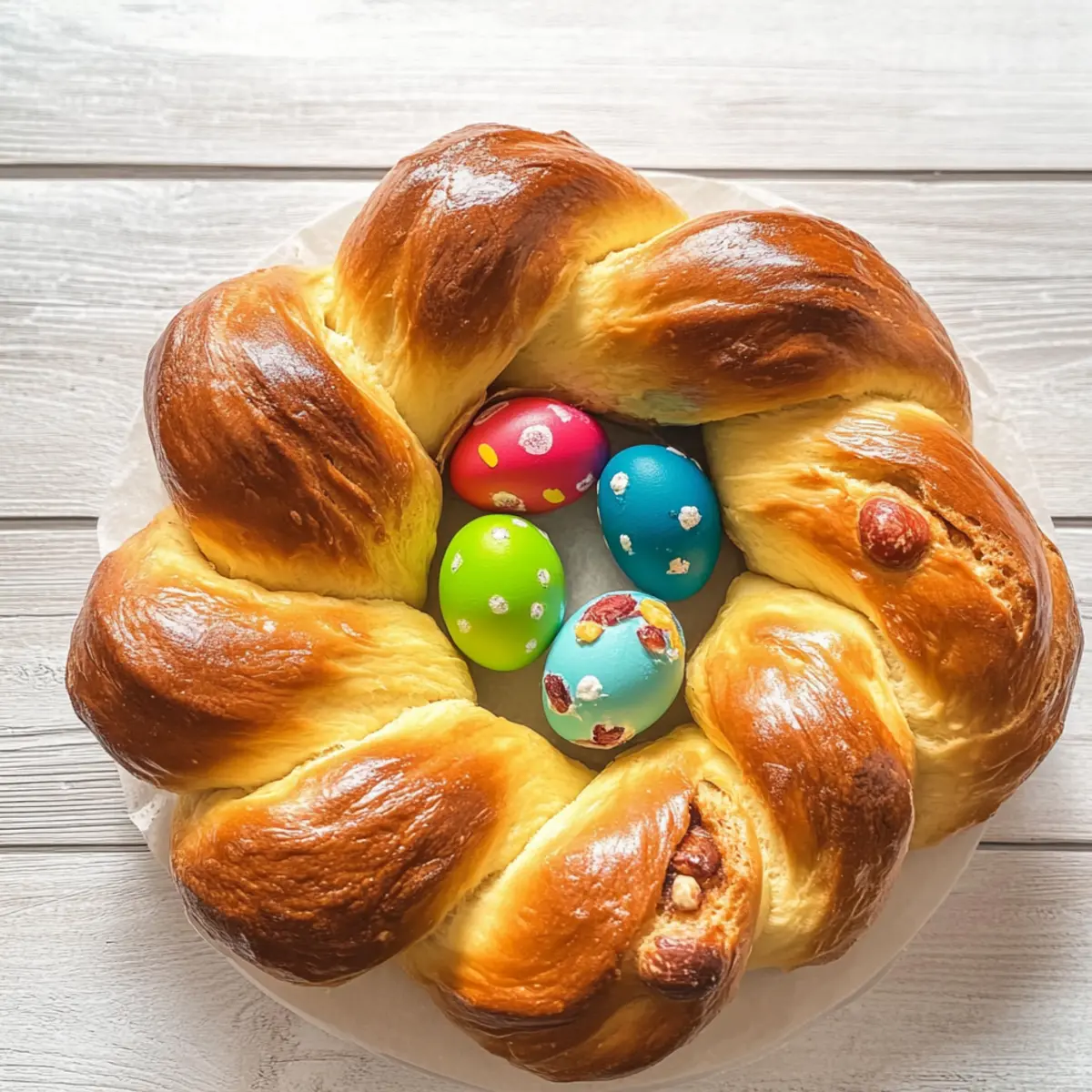
Why is Italian Easter Bread special?
Tradition: This bread celebrates the joy of Easter, rich in cultural significance and flavors.
Festive Colors: The vibrant, dyed eggs create a stunning centerpiece for your holiday table.
Family Fun: Making this bread can be a delightful activity to engage family and friends, bringing everyone together.
Versatile: Enjoy it as a full loaf or mini versions, fitting for any occasion.
Unique Flavor Fusion: A delightful combination of sweet fruits, crunchy nuts, and aromatic anise creates a memorable taste experience. Try serving it alongside your favorite beverage or with a spread of butter for extra enjoyment! Plus, if you're looking for more delightful baked goods, check out my Cinnamon Crunch Bread for another sweet treat.
Italian Easter Bread Ingredients
• Discover the essential ingredients for making this traditional delight!
-
For the Dough
-
All-purpose flour – Use 2-¾ to 3-¼ cups for the right dough consistency.
-
Sugar – Sweetness can be elevated with honey as a natural sweetener.
-
Active dry yeast – Ensure it's fresh for proper leavening in your Italian Easter Bread.
-
Salt – Enhances flavor, with sea salt being the best choice.
-
2% milk – Provides moisture; substitute with almond milk for a dairy-free version.
-
Butter – Use unsalted butter for better control over the overall saltiness.
-
Eggs (3 large) – Binds the dough; room temperature eggs incorporate more easily.
-
For the Add-ins
-
Mixed candied fruit – Adds festive flavor and decoration; raisins can be a suitable substitute.
-
Blanched almonds – Provides crunch and texture; feel free to swap with pecans for a nutty twist.
-
Aniseed – Infuses flavor, but can be omitted or replaced with vanilla if desired.
-
For Decoration
-
Dyed uncooked eggs (5) – Symbolic decoration; non-dyed eggs can be used for simplicity.
-
For the Optional Glaze
-
Confectioners' sugar – Adds sweetness to the glaze.
-
Vanilla extract – Enhances the flavor; almond extract can give it a different twist.
-
2% milk – Adjust for desired glaze thickness.
Now that you have all the necessary ingredients for your delightful Italian Easter Bread, let’s get baking and make this festive centerpiece an unforgettable part of your celebration!
Step‑by‑Step Instructions for Italian Easter Bread
Step 1: Dough Preparation
In a large mixing bowl, combine 1 cup of flour, sugar, yeast, and salt. Heat the milk and butter until reaching 120°-130°F; pour this mixture into the dry ingredients. Mix at medium speed for 2 minutes until smooth, then add 2 eggs and enough flour to create a soft dough. Knead the mixture on a floured surface for about 6-8 minutes until it feels smooth and elastic, indicative of well-developed gluten.
Step 2: First Rise
Transfer the dough into a greased bowl, turning it to coat all sides with oil. Cover the bowl with a clean cloth or plastic wrap to keep the moisture in, and place it in a warm area to rise until it doubles in size. This usually takes about 1 hour. You’ll know it’s ready when you gently press it, and the indentation remains.
Step 3: Dough Shaping
Once the dough has risen, gently punch it down to release excess air. Knead in the mixed candied fruits, blanched almonds, and aniseed for added flavor and texture, then allow it to rest for 10 minutes. Divide the dough into equal portions, roll each section into 24-inch ropes, and twist them together lovingly. Form the twisted braid into a ring shape, making sure to secure the ends.
Step 4: Egg Placement
Place the braided ring onto a greased baking sheet, creating small openings throughout the bread for decoration. Nestle the dyed uncooked eggs beautifully into the openings, showcasing their vibrant colors. Allow the formed ring to rise again until doubled, which should take around 40 minutes. It should puff up considerably, filling your kitchen with its wonderful aroma.
Step 5: Baking
Preheat your oven to 350°F while the dough is rising. Once the ring has puffed up nicely, brush the top with the remaining egg wash to achieve a golden crust. Bake the Italian Easter Bread in the preheated oven for 30-35 minutes, until the surface is golden brown and sounds hollow when tapped.
Step 6: Cooling and Glazing
After baking, remove the bread from the oven and let it cool on a wire rack. The cooling process will help set the texture. If you wish to add some sweetness, mix confectioners' sugar, milk, and vanilla extract for a glaze, then drizzle it over the cooled bread, enhancing the delightful flavors of your homemade Italian Easter Bread.

Italian Easter Bread Variations
Feel free to let your creativity shine and adjust this Italian Easter Bread recipe to suit your taste buds!
- Dairy-Free: Substitute cow's milk with almond milk and use a dairy-free butter alternative for a delightful twist.
- Nut-Free: Omit the almonds and replace them with sunflower seeds for a similar crunch without the allergens. It's a great way to keep the fun and texture alive!
- Citrus Burst: Incorporate the zest of an orange or lemon into the dough for a bright, refreshing flavor that complements the sweetness beautifully.
- Spiced Delight: Swap out aniseed for ground cinnamon or nutmeg, adding warmth and a comforting essence to your bread.
- Mini Loaves: For a fun serving option, divide the dough into small balls, shape them around the eggs, and create cute individual breads—perfect for sharing!
- Sweet Glaze: Elevate the flavor by adding a splash of fresh orange juice to your glaze, giving it a citrusy pop that will brighten up any slice.
- Chocolate Chips: Add mini chocolate chips to the dough for a surprising sweetness burst in every bite, perfect for those with a sweet tooth.
- Herb Infusion: For a savory twist, mix in finely chopped fresh herbs like rosemary or thyme, balancing sweetness with aromatic earthiness.
And if you're in the mood for a different sweet treat, be sure to check out my delicious Cinnamon Crunch Bread or bring some vibrant color to your table with a slice of this delightful Baked Italian Vegetable for a wholesome meal. Adjusting this lovely bread can make it your very own!
Make Ahead Options
Making your Italian Easter Bread ahead of time can save you precious moments during your festive preparations! You can prepare the dough up to 24 hours in advance. Simply complete the dough preparation steps and, after the first rise, cover it tightly and refrigerate it. When you're ready to bake, bring the dough back to room temperature (about 30 minutes), then shape, add the eggs, and allow it to rise again. Alternatively, you can shape the bread and freeze it for up to 3 days—just be sure to wrap it well to prevent freezer burn. This way, you’ll enjoy the same delightful flavors while saving time, allowing you to focus on creating beautiful memories with family and friends!
Tips for the Best Italian Easter Bread
-
Yeast Freshness: Always check the expiration date of your active dry yeast to ensure proper rising. Using expired yeast can lead to dense bread.
-
Dough Temperature: Ensure your milk is heated correctly (120°-130°F) to activate the yeast without killing it. Too hot, and your dough won't rise!
-
Flour Adjustments: Start with the lower amount of flour and gradually add more. This prevents a dry dough, ensuring your Italian Easter Bread stays soft and fluffy.
-
Kneading Technique: Knead the dough until it's smooth and elastic, about 6-8 minutes. This develops the gluten needed for that lovely texture in your bread.
-
Resting Time: Don’t skip the resting periods! Allowing your dough to rise fully twice is essential in creating that light and airy loaf filled with flavor.
-
Decoration Placement: When placing the dyed uncooked eggs, ensure they are secure in the dough openings, so they don’t fall out during baking, giving you a beautiful presentation.
How to Store and Freeze Italian Easter Bread
Room Temperature: Keep the bread in a sealed bag or an airtight container for up to 3 days to maintain freshness.
Fridge: Store in the refrigerator for up to 5 days; wrap in plastic wrap to prevent drying out.
Freezer: Freeze individual slices or whole loaves in freezer-safe bags for up to 3 months. Thaw at room temperature before enjoying.
Reheating: Warm up slices in the oven at 350°F for about 10 minutes or in the microwave for 15-20 seconds for a delightful taste of your Italian Easter Bread!
What to Serve with Traditional Italian Easter Bread
Savor the rich flavors of this festive bread alongside delightful companions that elevate your holiday gathering.
-
Creamy Mashed Potatoes: The buttery, velvety texture of mashed potatoes provides a lovely contrast to the sweet bread, making each bite a comforting experience.
-
Herbed Roasted Vegetables: Colorful roasted veggies, seasoned with fresh herbs, offer a delightful crunch and a burst of savory flavor that complements the sweetness of the bread.
-
Spring Salad: A light and refreshing salad featuring mixed greens, citrus segments, and a zesty vinaigrette brightens your table and balances the rich ingredients of Easter Bread.
-
Italian Antipasto Platter: Serve alongside a selection of cured meats, cheeses, olives, and marinated vegetables for a flavorful display that invites everyone to share.
-
Homemade Lemonade: The tart and refreshing notes of homemade lemonade provide a thirst-quenching contrast to the sweetness of the bread, enhancing your holiday experience.
-
Rich Coffee or Herbal Tea: Pairing with a warm cup of coffee or fragrant herbal tea brings out the aromatic notes of the Italian Easter Bread, making for a cozy afternoon treat.
-
Peach Cobbler: A sweet dessert like peach cobbler takes advantage of seasonal fruits and brings a comforting, homey conclusion to your festive meal.

Italian Easter Bread Recipe FAQs
What ingredients should I look for to ensure the best Italian Easter Bread?
Absolutely! For the best results, choose fresh active dry yeast, and check that your eggs are at room temperature for better incorporation into the dough. When selecting candied fruits, look for vibrant colors without dark spots or an unpleasant smell. This will enhance the festive look and flavor of your bread.
How should I store Italian Easter Bread to keep it fresh?
To keep your Italian Easter Bread fresh, store it in a sealed bag or an airtight container at room temperature for up to 3 days. If you need it to last longer, wrap it in plastic wrap and refrigerate it where it can stay good for 5 days. Just make sure to let it come to room temperature before serving for the best flavor.
Can I freeze Italian Easter Bread, and what’s the best method?
Very! You can freeze Italian Easter Bread easily. First, allow it to cool completely after baking. Then wrap individual slices or the whole loaf tightly in plastic wrap, followed by a layer of aluminum foil or a freezer-safe bag. This will protect it from freezer burn. You can store it in the freezer for up to 3 months. When you’re ready to enjoy it again, simply thaw it overnight in the refrigerator or at room temperature, and warm slices in the oven for about 10 minutes!
What should I do if my dough doesn’t rise properly?
If your dough isn’t rising correctly, it could be due to the yeast being expired or the milk being too hot when added. To troubleshoot, check the expiration date on your yeast, and when heating the milk, ensure it’s between 120°-130°F—too hot can kill the yeast. If it’s not rising, try placing it in a warmer area (like an oven with just the light on) or try making a new batch using both fresh yeast and warm milk.
Is there a way to adjust this recipe for dietary restrictions?
Absolutely! For gluten-free options, consider using a gluten-free all-purpose flour blend. If you're looking for a dairy-free version, almond milk works great in place of 2% milk. Substitute butter with a dairy-free spread to maintain richness. Additionally, to make it less sweet, you can reduce the sugar by half or sweeten it with honey.
Can my pets eat Italian Easter Bread?
While the ingredients in Italian Easter Bread are generally safe for human consumption, they may not be suitable for pets. Ingredients like sugar can lead to health issues for dogs and cats, and foods that include nuts can be harmful to pets in large amounts. It’s best to keep any bread, especially with added sugars and toppings, away from pet access.

Delicious Italian Easter Bread to Celebrate Spring's Joy
Ingredients
Equipment
Method
- In a mixing bowl, combine 1 cup of flour, sugar, yeast, and salt.
- Heat the milk and butter to 120°-130°F; pour into dry ingredients. Mix at medium speed for 2 minutes until smooth.
- Add 2 eggs and enough flour to create a soft dough. Knead for 6-8 minutes until smooth and elastic.
- Transfer dough to a greased bowl, cover and let rise until doubled, about 1 hour.
- Punch down the dough, knead in add-ins and rest for 10 minutes.
- Divide into portions, roll into ropes, twist them together, forming a ring and securing ends.
- Place on greased baking sheet and insert dyed eggs, letting it rise for another 40 minutes.
- Preheat oven to 350°F. Brush with egg wash and bake for 30-35 minutes until golden brown.
- Let cool on a wire rack. Optionally mix glaze ingredients and drizzle over the cooled bread.



Leave a Reply